

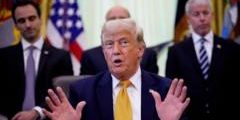
Former President Donald Trump has recently escalated tensions between the United States and European nations by threatening to impose a 100% tariff on a range of goods. This bold move is a direct response to the European Union’s implementation of a digital services tax (DST) targeting major tech companies, many of which are based in the U.S.
Latest developments
Trump announced his tariff plan during a public address, indicating that the measure reflects the American administration’s commitment to protect U.S. interests in international trade. He portrayed the digital services tax as unfair, arguing that it places an undue burden on American companies while benefiting European nations economically. The former president’s comments have reignited discussions on international tax policies and their implications for global trade dynamics.
Following Trump’s announcement, several European leaders expressed concern about the potential impact of his proposed tariffs. Some have warned that such a drastic measure could lead to a tit-for-tat escalation in trade tensions between the U.S. and Europe, prompting fears of a broader trade war. Meanwhile, U.S. lawmakers are divided, with some supporting Trump’s tough stance on Europe and others cautioning against the potential economic fallout of imposing heavy tariffs.
Background and context
The issue of digital services tax has been a contentious point between the U.S. and Europe for several years. Many European countries, including France and Spain, have enacted DSTs that target large tech firms like Google, Amazon, and Facebook, arguing that these companies generate significant revenue from local markets without paying commensurate taxes. These taxes have been met with fierce opposition from U.S. officials, who contend that they discriminate against American businesses and violate international trade agreements.
In response to these concerns, the Biden administration has sought to engage with European leaders to negotiate a unified framework for taxing digital entities globally. However, Trump’s renewed focus on trade disputes suggests a shift back to protectionist policies that could undermine these diplomatic efforts. Trump had previously adopted a similar approach during his presidency, imposing tariffs on steel and aluminum imports from various countries to protect American industries.
What to watch next
As Trump continues to push his tariff proposal, attention will shift to how European nations respond. Leaders may seek to negotiate with the U.S. to avoid the implementation of such tariffs. The potential for retaliatory measures could also influence policymakers’ strategies on both sides of the Atlantic. Observers will be watching closely for upcoming international trade meetings and discussions, as they may provide a platform for resolving these disputes.
Furthermore, the impact of these tariffs on American consumers and businesses will be a key consideration. Economists warn that such a significant increase in tariffs could lead to higher prices for imported goods in the U.S., affecting everything from electronics to automobiles. As this situation unfolds, the interplay between trade policy, diplomacy, and market responses will shape the economic landscape for both the United States and Europe.
Original Source: https://www.bbc.co.uk/news/articles/cn4rd71411ko?at_medium=RSS&at_campaign=rss